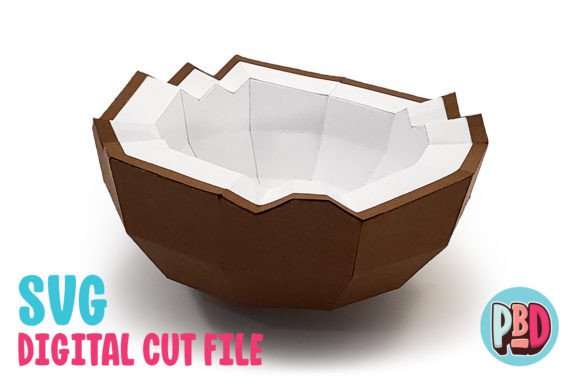
Coconut 3D Papercraft: A Versatile Shape for Branding and Packaging
As a brand designer with years of experience helping small businesses create strong visual identities, I always look for design assets that can bring character and cohesion to branding projects. Recently, I came across the Coconut 3D Papercraft and was immediately intrigued by its potential. This SVG shape is more than just an illustration—it’s a thoughtful design that evokes warmth, nature, and creativity. Let me walk you through my evaluation as someone who uses these kinds of elements in real-world branding and packaging scenarios.
A Natural Fit for Handmade Businesses and Local Brands
The first thing I noticed about the Coconut 3D Papercraft is how it naturally suggests an organic and handmade aesthetic. The intricate yet clean lines, the subtle texture of the papercraft style, and the overall structure all point toward a playful yet premium mood. It doesn’t scream bold or aggressive; instead, it whispers calmness, sustainability, and artisanal charm.
This kind of vibe aligns perfectly with local brands like handmade soap shops, natural skincare brands, eco-friendly boutiques, or even beachside cafes. If your business thrives on a warm, inviting, and authentic feel, this graphic design asset could be a perfect addition to your toolkit.
Practical Uses Across Brand Touchpoints
One of the key strengths of the Coconut 3D Papercraft is its versatility. Here are some of the ways I’ve imagined using it in real branding projects:
- Product Labels: As a central icon or background element, the coconut shape adds a decorative but functional touch. For example, a tropical-inspired candle line could feature the coconut design subtly behind the product name to reinforce the theme without overwhelming the text.
- Packaging Accents: On gift boxes, wrapping paper, or product containers, this 3D SVG shape can serve as a branded accent. Its dimensionality makes it stand out on shelves, especially for boutique stores or seasonal product campaigns.
- Social Media Graphics: Whether it’s a summer collection announcement or a thank-you card for customers, the Coconut 3D Papercraft can add a tactile, handcrafted feel to digital content. Pair it with pastel tones or soft gradients for a cohesive visual story.
- Menu Graphics or Price Lists: For food businesses, especially those serving tropical or plant-based dishes, this design can enhance menu sections or price tags with a unique visual flair.
- Hang Tags and Thank-You Cards: Use the papercraft style to print hang tags or custom thank-you cards. The shape can become part of your brand identity, reinforcing your commitment to quality and attention to detail.
- Website Banners and Promotional Ads: When used in hero graphics or promotional banners, the Coconut 3D Papercraft can help set the tone for your brand story. It works well in both editorial design and web design formats.
- Printable Inserts and Product Mockups: Include it in printable inserts inside product boxes or use it in mockups to show off your packaging designs in a realistic setting.
Enhancing Brand Presentation with Visual Hierarchy
What I appreciate most about this design is how it supports visual hierarchy and brand consistency. In the right context, it can guide the viewer’s eye toward key brand messages while maintaining a professional look. For instance, when paired with minimalist typography, it can elevate a simple label into something memorable.
Using the Coconut 3D Papercraft consistently across different materials—like packaging, labels, and social media—helps build stronger brand recognition. Customers start to associate the shape with your products, which increases trust and familiarity over time.
Creating Emotional Connection Through Design
Design isn’t just about aesthetics—it’s about storytelling and emotional resonance. The Coconut 3D Papercraft has a natural, almost nostalgic appeal that connects with audiences looking for authenticity. It brings to mind beach days, fresh fruit, and eco-conscious living—perfect for local brands trying to stand out in crowded markets.
I see this working particularly well for a coconut water startup or a healthy snack company targeting wellness-focused consumers. The 3D aspect gives it a tangible quality, making it ideal for printables and physical product packaging alike.
Where the Coconut 3D Papercraft Shines
Here are some specific areas where I believe this design asset will deliver the most impact:
- Hero Graphics: The three-dimensional structure allows it to be the focal point of a design, whether printed on a box or used as a digital banner.
- Seasonal Campaigns: With the right color adjustments, it can easily adapt to holiday themes or seasonal promotions, such as a summer sale or a tropical-themed event.
- Boutique Visuals: Small shops or online stores selling handmade goods can use this shape to differentiate their packaging from mass-produced competitors.
- Decorative Brand Elements: Think of it as a signature motif that ties together various parts of your brand identity—from stickers to flyers.
- Promotional Banners: The shape adds depth and interest, especially when layered with other SVGs or illustrations to create a rich, immersive visual.
When to Use It with Caution
While the Coconut 3D Papercraft is a powerful design tool, there are situations where it might not be the best fit. For one, it should be avoided in formal corporate branding or luxury minimalist designs, where simplicity and sophistication take precedence. The intricate nature of the papercraft could clash with a sleek, modern aesthetic.
Also, be cautious when using it on very small labels or in layouts where important text needs to be legible. The design may need simplification or scaling down to maintain clarity. Similarly, if you’re designing packaging with a lot of ingredient lists or legal information, the decoration shouldn’t compete with the necessary details.
Another consideration is low-contrast backgrounds. Since this is a white-on-transparent design, ensure it’s placed against colors or textures that make it pop. Otherwise, it may lose its visual strength.
Designer Tips for Real-World Application
To get the most out of the Coconut 3D Papercraft in your branding work, here are a few practical steps I recommend taking before finalizing any design:
- Test it on real packaging mockups: See how it looks at scale and in context. Is it too busy? Does it integrate well with your existing design?
- Check black and white usage: Some clients require grayscale versions for printing or accessibility reasons. Make sure the design still reads clearly without color.
- Preview it on small labels: If you're planning to use it on product tags, test it at actual size to avoid overcrowding or loss of detail.
- Test it with your brand colors: Import it into your Canva template or design software and experiment with different color overlays to find the best match.
- Compare it with competitor packaging: Will it help your product stand out, or blend in too much? Consider its uniqueness in your niche market.
- Check print quality: Ensure that the PNG version maintains sharpness at the sizes you plan to use it. High-resolution files are essential for professional branding.
- Review SVG or vector editability: If you need to customize the design further, verify that the 3D SVG file allows for easy manipulation without losing quality.
- Test beside different font styles: Try pairing it with serif, sans serif, script, handwritten, and display fonts to ensure it complements your typography choices.
- Confirm commercial licensing: Before using it in client work, product sales, or promotional materials, always verify that it comes with a proper commercial license to avoid legal issues.
Bringing It All Together
Overall, the Coconut 3D Papercraft is a compelling design asset that can add personality and professionalism to your branding efforts. Measuring 5 W x 5 D x 3 H and designed for medium cardstock, it offers a tactile quality that translates beautifully into digital form. Whether you’re creating a new product label, designing a seasonal campaign, or building a cohesive brand identity, this shape provides a solid foundation.
It’s especially useful for businesses in the food, home decor, and handmade industries, where a personal touch can make all the difference. However, it's important to evaluate how it fits within your brand narrative and design strategy. Don’t just add it for the sake of decoration—use it intentionally to support your brand message and customer experience.
If you're looking for a design asset that bridges the gap between digital and print, and brings a sense of craft and care to your visuals, the Coconut 3D Papercraft is worth exploring. Just remember to apply it thoughtfully and strategically for maximum impact in your small business branding efforts.